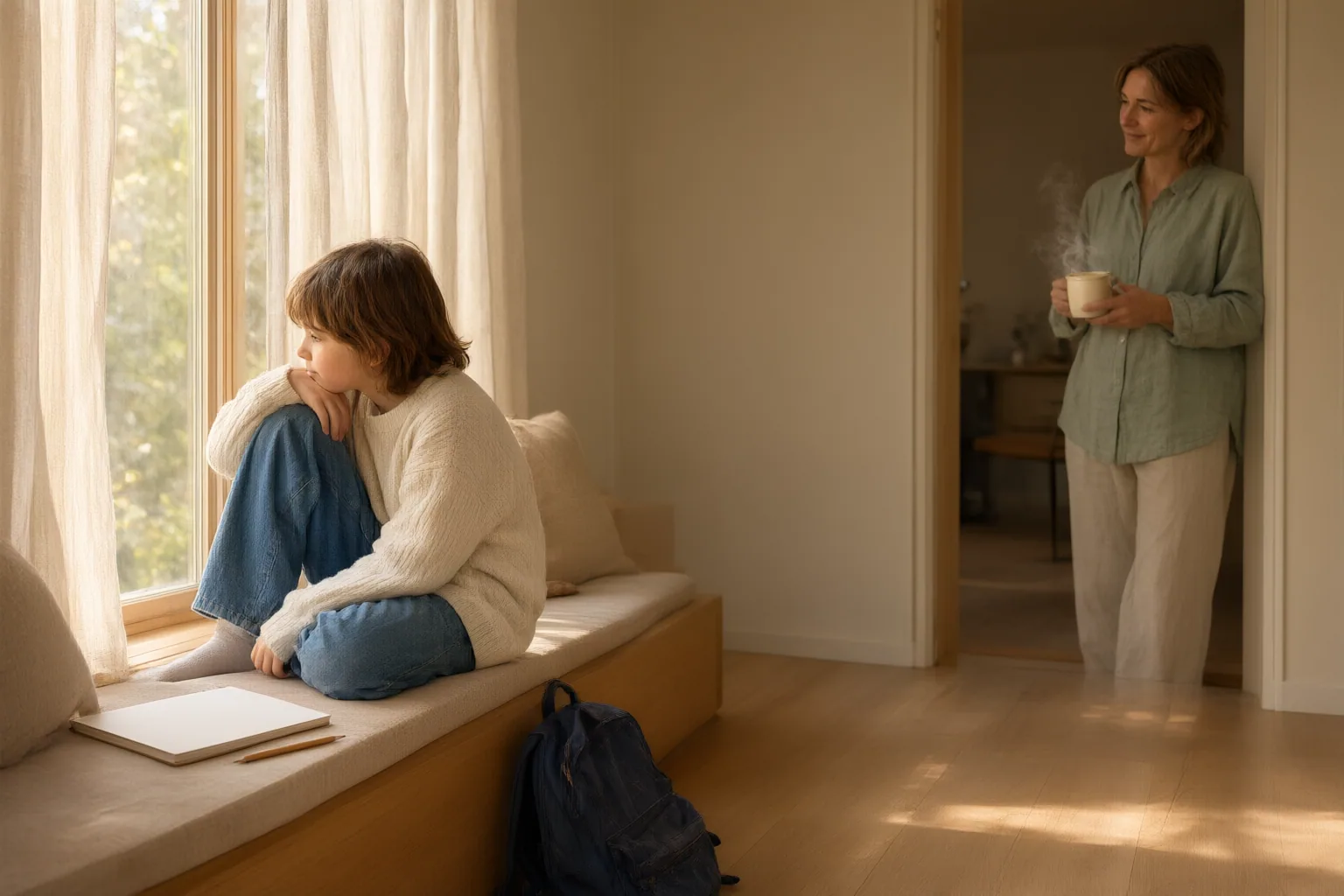
A cautious, low-pressure approach is to acknowledge your child’s wish for quiet, make one clear invitation to talk later and avoid guessing what the silence means. This is an editorial framework, not a source-tested parenting method.
Start by treating quiet as part of listening
When a child asks for quiet time after school, listening can begin with noticing and respecting that request. Instead of immediately asking for an account of the day, a parent might say, “You can have some quiet. I’m available if you want to talk later.” This is a practical editorial suggestion rather than a finding established by the supplied research.
The supporting editorial source explores listening through ambient sound, echolocation, background music and sound art. It does not examine children, families or after-school routines. Still, its broad attention to sound and quiet provides context for thinking about listening as more than spoken exchange. Applied cautiously, that idea leaves room for a parent to communicate availability without requiring an immediate response.
Quiet alone does not provide enough information to establish what happened at school or what a child is feeling. The immediate aim is therefore modest: recognize the request, keep the relationship open and allow the transition home to remain quiet for the moment.
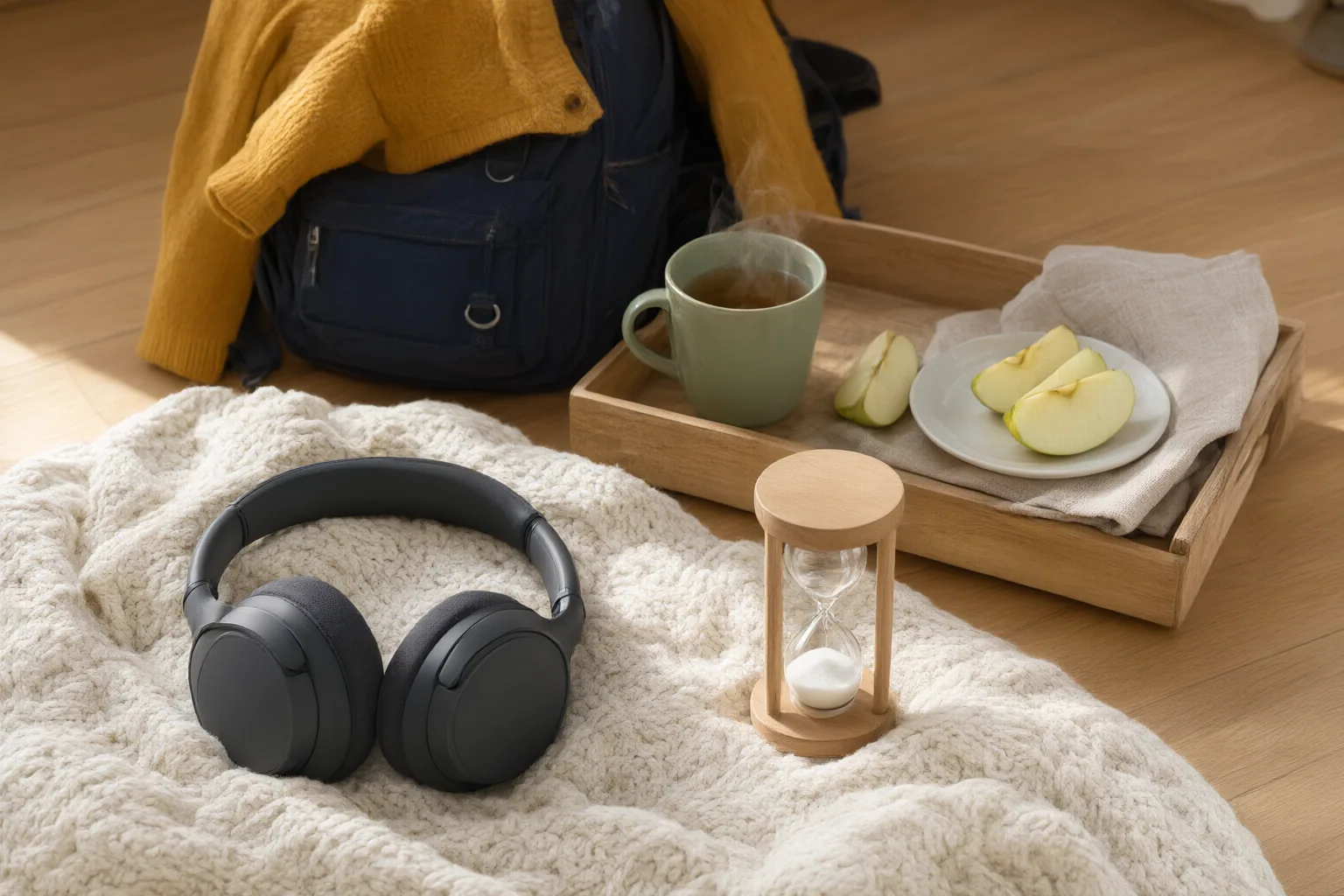
Do not assign a meaning to silence too quickly
A quiet arrival does not explain itself. Without additional information, it should not automatically be labeled as anger, rejection, distress or evidence that something went wrong. A neutral observation—“You seem to want some quiet”—makes fewer assumptions than a conclusion about the child’s motives or emotional state.
The second source is an overview of *All Quiet on the Western Front*. It describes a fictional protagonist who feels detached from civilian life after returning home from World War I. That literary situation is fundamentally different from a child returning from school and cannot support a parenting conclusion. Its limited relevance is simply that outward disconnection and its causes should not be treated as interchangeable across contexts.
For an after-school interaction, a restrained editorial approach is to separate what is observable from what remains unknown. A parent may observe that the child is not ready to speak, but the reason should remain an open question unless the child provides more information. This avoids turning silence into a diagnosis or demanding that the child correct an unsupported interpretation.
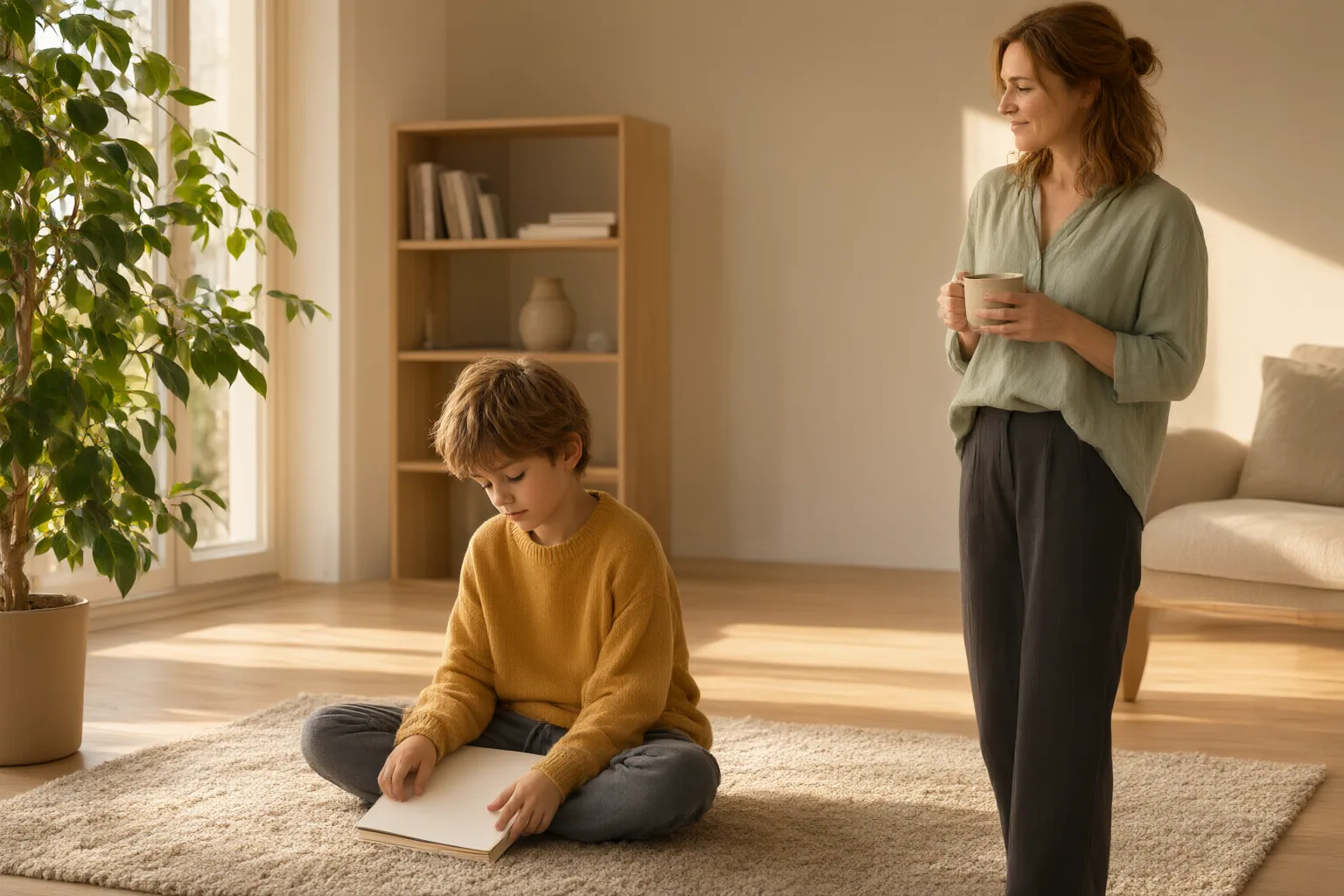
Offer one invitation, then leave room for a later answer
A simple invitation can contain three elements: acknowledge the request for quiet, state that conversation remains available and name a possible later check-in. For example: “I’ll give you some space. If you want to talk, I’m here, and I can check in after dinner.” This wording is an editorial example, not language tested or endorsed by the supplied source.
After making the invitation, avoid turning it into a series of repeated questions. Leaving room for a later answer keeps the offer distinct from a demand for immediate disclosure. If a later check-in was mentioned, it can remain brief: “Would you like to talk now, or would you prefer more quiet?” The child’s answer can then guide whether the conversation continues.
The source about listening, ambient sound and quiet supplies only broad conceptual context. It offers no evidence that this sequence improves family communication or produces a particular outcome. Accordingly, the framework should be understood as a low-pressure way to organize the parent’s response: notice the stated preference, express availability and preserve a clear route back to conversation without claiming to know what the quiet signifies.
Conclusion
When your child wants quiet time after school, a careful response is to make space for that preference, avoid inventing an explanation and offer one uncomplicated way to reconnect. This is editorial guidance derived cautiously from sources that discuss quiet, listening and disconnection in other contexts; they do not provide tested recommendations for after-school parenting.
Choose one short, pressure-free invitation you can use consistently, such as: “Take the quiet time you need; I’m available when you want to talk.” Then step back and leave the option to reconnect open.
Disclosures and limitations
- This article was prepared with AI assistance from the supplied research package. Its sources address listening, quiet and fictional disconnection, not after-school parenting, so the practical framework is identified as editorial guidance rather than research-backed advice.
Related reading
Sources
- Quiet Time | Are.na Editorial — Are.na
- All Quiet on the Western Front – Wikipedia — en.wikipedia.org