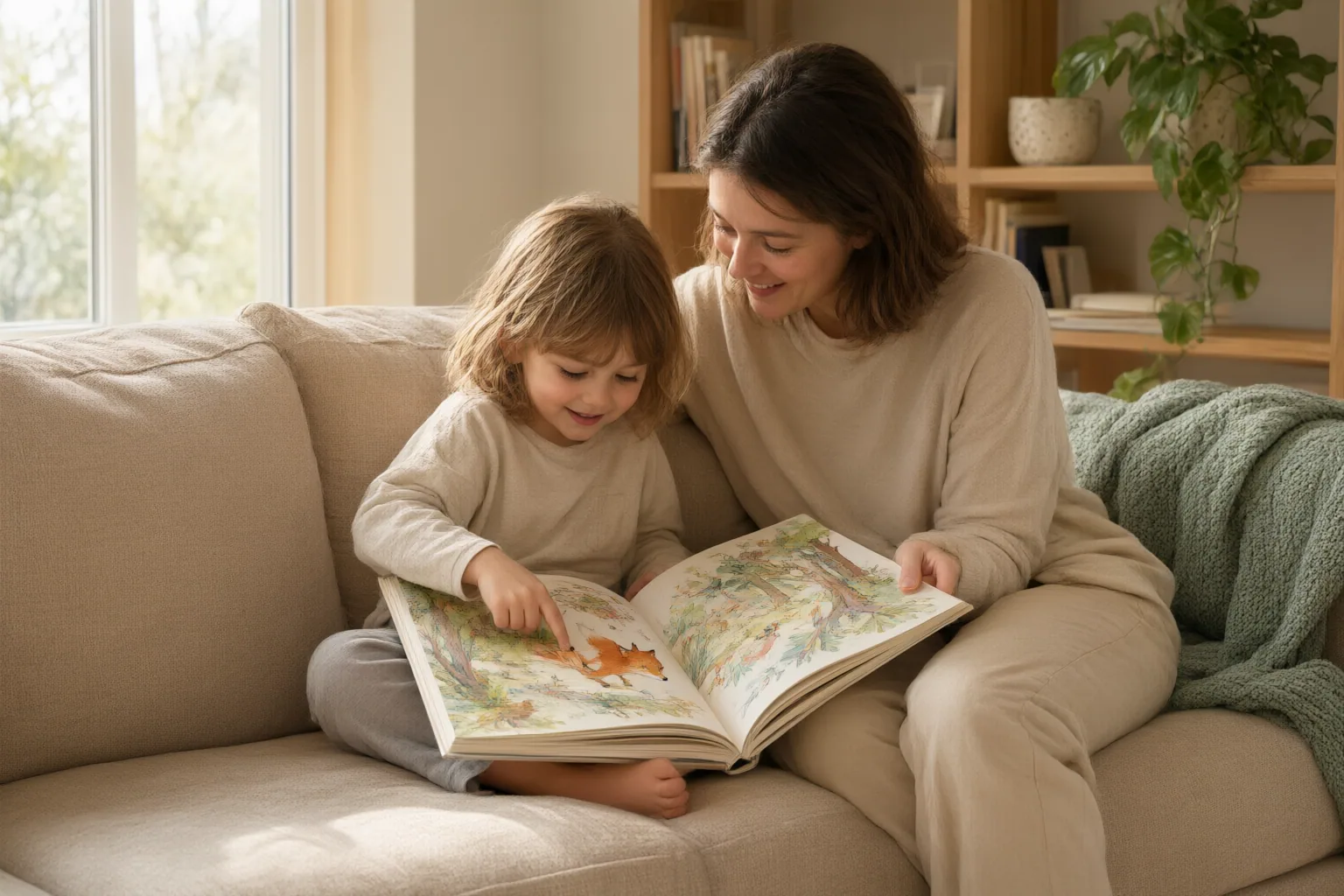
Wordless picture books invite children to build a story from illustrations. Parents can support them by noticing details together, asking open-ended questions, taking turns narrating, and helping organize events—without insisting on one “correct” version.
Begin With the Pictures, Not a Perfect Story
A wordless picture book conveys its story through illustrations rather than printed narration. Sequence, facial expressions, visual cues, and details in the setting can all suggest what is happening. This means neither parent nor child needs to produce a polished story immediately.
Start by giving your child time to study the first picture. Look together for characters, actions, expressions, objects, and changes in the surroundings. Let the child’s observations guide the first lines of the story, even if they differ from your interpretation. As you move through the book, the illustrations and context clues can open conversations about the plot, characters’ feelings, vocabulary, and the way a story is structured.
There may be more than one reasonable reading of a scene. Treating the pictures as material for exploration, rather than clues to a predetermined answer, gives the child room to imagine and narrate in their own words.
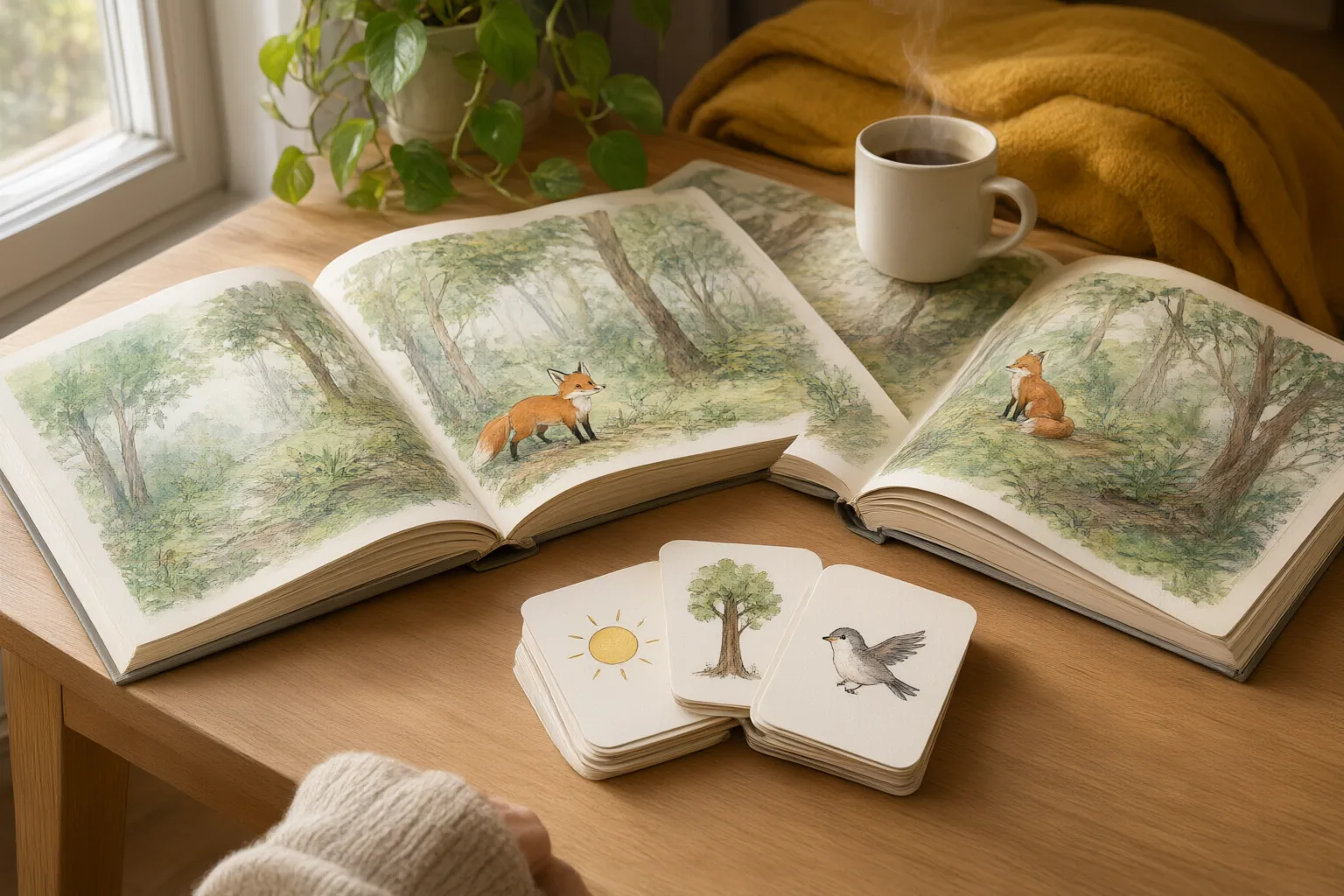
Use Open-Ended Prompts to Build the Story
Ask questions that invite explanation instead of testing for a single answer. Useful prompts include:
- “What is happening here?”
- “What details do you notice?”
- “How do you think this character feels? Why?”
- “What might happen next?”
Follow the child’s response with curiosity. If they point out one action, you might ask what caused it or what a character could do next. Take turns narrating pages so storytelling feels shared. You can expand a brief observation with narrative language while preserving the child’s idea: “Yes, the dog is running—perhaps it is hurrying toward the gate.” Introduce a relevant word when it helps describe an expression, movement, or setting, but avoid taking control of the story.
Pictures can also be connected with experiences familiar to the child. If a scene recalls a family outing, a friendship, or an encounter with weather or animals, invite the child to explain the connection. When the child predicts an event, return to that prediction after turning the page. Whether it happened or not, comparing the prediction with new visual evidence keeps the conversation focused on reasoning and imagination rather than right and wrong answers.
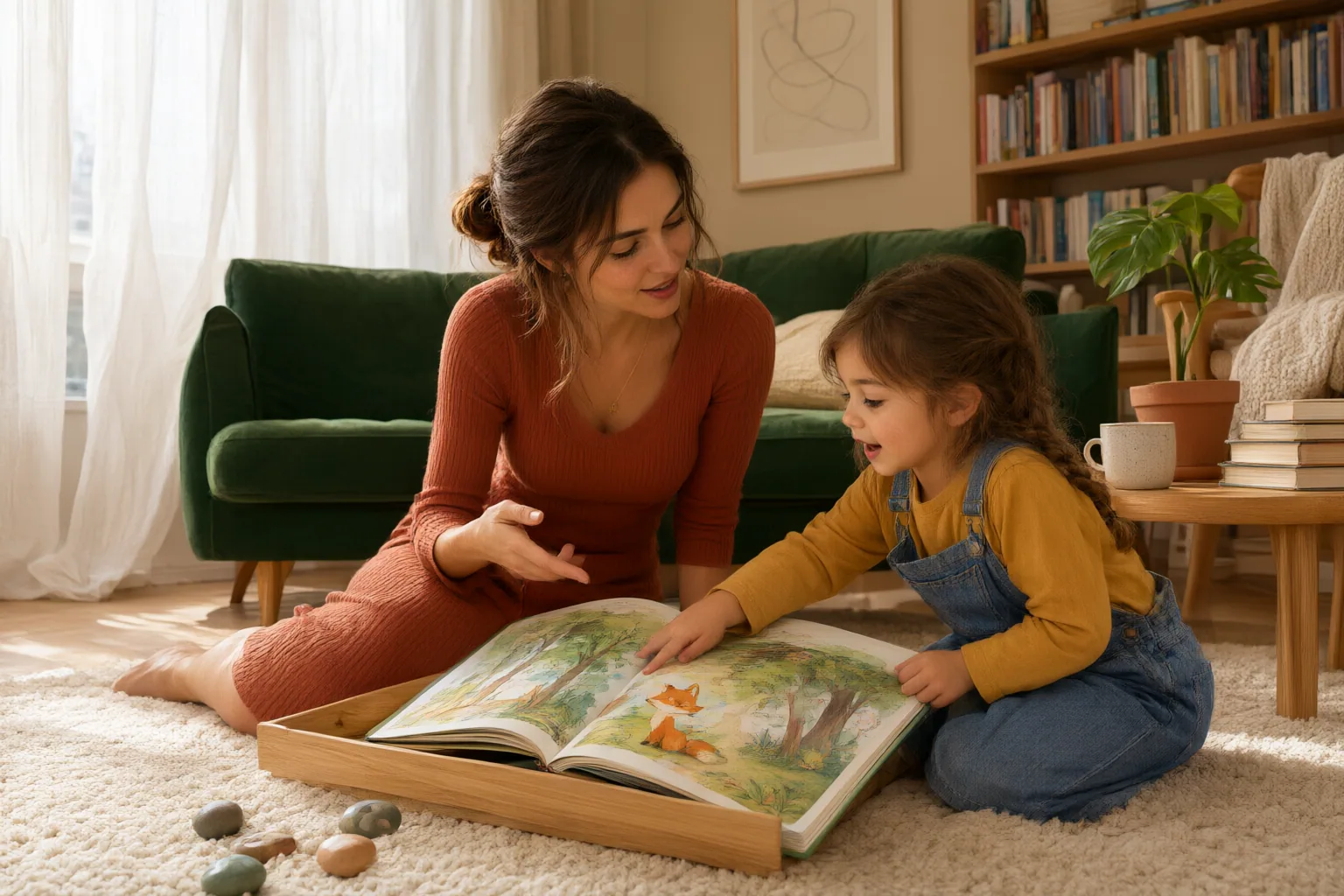
Help the Child Retell, Reimagine, and Extend the Story
After reaching the final picture, invite the child to retell the story in sequence. Simple prompts—“What happened first?”, “What happened in the middle?”, and “How did it end?”—can help connect separate observations into a coherent narrative. If the child skips an event, return to the relevant illustration and examine it together instead of supplying a correction immediately.
A later reading does not have to reproduce the first version. The same illustrations can support different interpretations, allowing children to change a character’s motives, notice previously missed details, or narrate events in a new way. Comparing versions can also show how one visual detail changes the direction of a story.
The story can continue beyond the book. A child might act out a scene, invent a further adventure, draw an additional picture, or create an alternate ending. When appropriate, the child can dictate captions to an adult or write their own. These activities should extend ideas already inspired by the illustrations rather than become another test of recall.
Conclusion
Choose a book whose subject offers an inviting starting point for your child. The supplied book lists show that wordless or nearly wordless stories cover themes including family relationships, friendship, kindness, difficult peer interactions, animals, nature, emotions, and fantasy. These lists provide examples, not evidence that one title is best or appropriate for every child.
The most useful choice is one that sparks attention and conversation. Begin simply: choose one wordless picture book, let your child study the first illustration, and ask, “What do you notice?” Allow that first observation to become the beginning of a story you build together.
Disclosures and limitations
- This article was prepared with AI assistance from the supplied educational and book-list sources; those sources are not primary research or official literacy guidance, so their practical suggestions should be understood with that limitation.
- Some underlying book lists contain recommendation or affiliate-style material. No comparative product judgment is made here, and any named or listed books should be treated as examples rather than endorsements.
Related reading
Sources
- Tips for Using Wordless Books to Boost Early Literacy — Reality Pathing
- 26 Wordless Picture Books for Kids — Growing Book by Book
- 20 Stunning Picture Books Without Words for Kids and Adults — Reading Middle Grade