
A useful family media plan turns general concerns about screen time into a personalized agreement. Begin with each child’s age, health, and activities; identify the values and activities you want to protect; then choose clear rules, media-free times, and media-free locations.
Start with your family’s needs and values
A family media plan does not have to begin with a universal limit. The American Academy of Pediatrics describes its Family Media Use Plan as something parents can personalize according to a child’s age, health, and activities. That makes the household’s actual circumstances the practical starting point.
Consider each child separately. Record their age, relevant health needs, regular activities, and the ways media currently fits into the day. Then identify the family values and important activities that the plan should support. The Institute of Child Psychology says a customized plan can align goals and rules with family values, while warning that media used without clear intention can displace important activities and interfere with a child’s development.
Turn those ideas into a short statement of purpose. For example, the plan might be intended to protect selected family activities while making media use more deliberate. Keep the statement tied to your household rather than treating another family’s arrangement as a ready-made formula. If children have different needs or schedules, the resulting expectations can reflect those differences.
Set clear media goals and workable rules
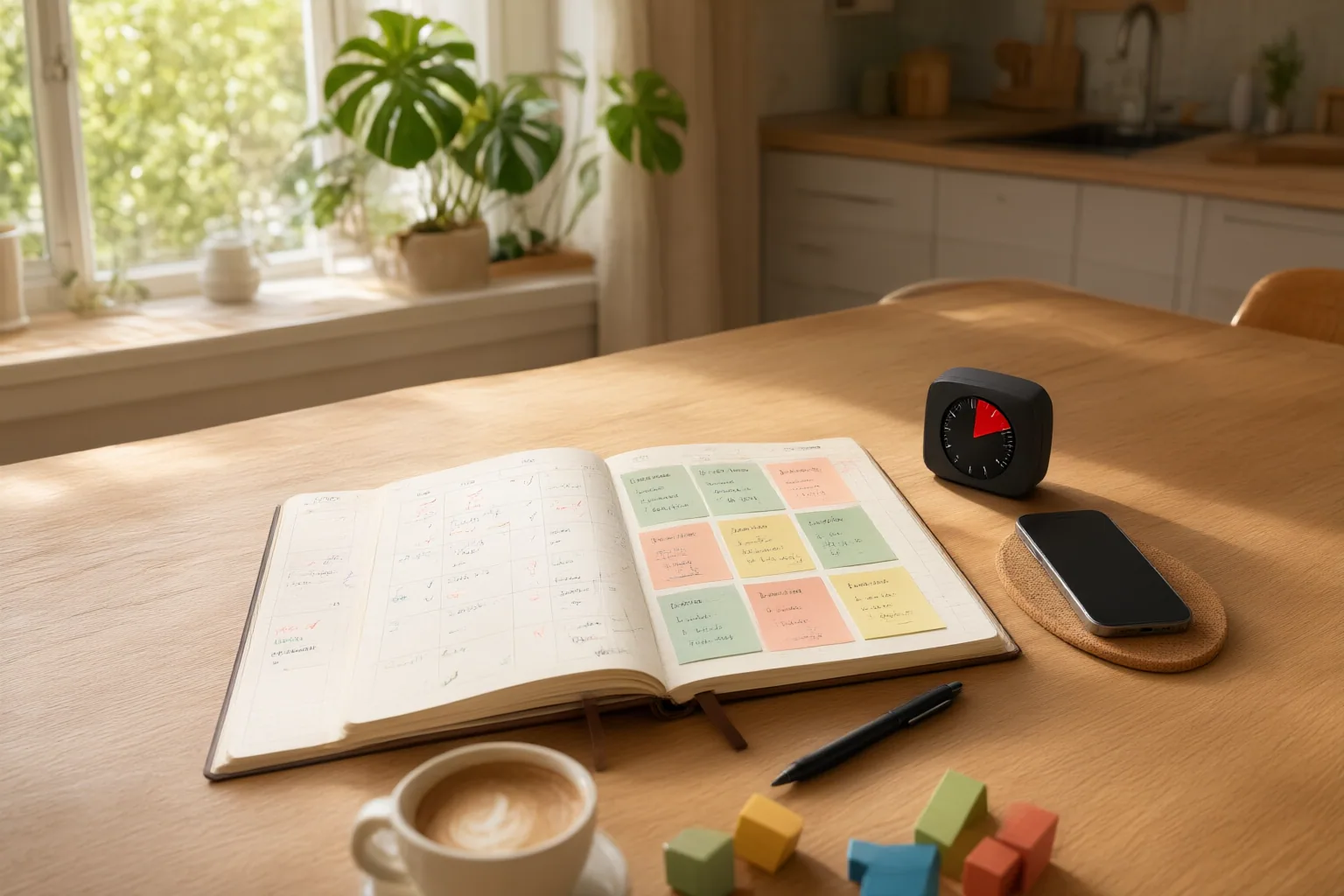
Next, convert broad concerns into a small number of goals. The Institute of Child Psychology describes its printable as a step-by-step guide for developing customized goals and rules that align with family values. A structured process can help families move from “we should use screens differently” to an agreement that can be written down and discussed.
Start by naming what each goal is meant to protect. If an important family activity is being displaced, the goal can focus on preserving that activity. Then write a corresponding rule in direct language. Keeping the connection between the value, goal, and rule visible gives the restriction a stated purpose instead of presenting it as an isolated limit.
A simple planning format is:
- Value or activity: Identify what matters to the household.
- Goal: State what the family wants media use to support or avoid displacing.
- Rule: Describe the agreed expectation clearly.
- Scope: Note which child or family members the rule addresses and when it applies.
Review the draft for fit with each child’s age, health, and activities, consistent with the AAP’s personalized approach. The purpose is not to accumulate as many restrictions as possible. It is to create a concise agreement that connects media decisions with the needs and values already identified.

Choose media-free times and locations
The AAP’s promotional material specifically recommends designating media-free times and locations. Make those choices concrete by looking at the family’s established routines and the non-media activities the plan is intended to protect.
List the times and places under consideration, and discuss why each one matters. Select a manageable starting point instead of leaving the agreement as a broad instruction to use media less. Write down exactly when a media-free period begins and ends, or which location is covered, so family members can understand the boundary in the same way.
Connect each choice to the plan’s purpose. A media-free time or location should preserve an activity or value the family has already identified, not operate as an unexplained restriction. The Institute of Child Psychology’s guidance supports setting goals and rules around family values and using media intentionally so it does not displace important activities.
Include these decisions in the same written plan as the household’s goals and rules. A single document makes it easier to see how the personalized needs, protected activities, and specific boundaries relate to one another.
Conclusion
A family media plan is a personalized household agreement, not a universal screen-time formula. Build it around each child’s age, health, and activities; use family values to define its goals and rules; and name the times and locations where media will be set aside. These elements reflect the AAP’s emphasis on personalization and media-free boundaries, alongside the Institute of Child Psychology’s structured, values-based approach.
Start today with one concrete step: choose one media goal and one media-free time to discuss as a family. Record the agreement, including what it is intended to protect, and revisit it as your children’s needs and activities change.
Disclosures and limitations
- This article was prepared with AI assistance from the supplied research package and approved content plan; its material claims are limited to the cited source IDs.
- No products are recommended in this article, and no affiliate relationship is represented.
Related reading
Sources
- How to Make a Family Media Plan — HealthyChildren.org
- Family Media Plan Printable — Institute of Child Psychology
- Family Media Plan Promotional Materials — aap.org